In the 1480s a young man fell into a hole close to the Coliseum in Rome and found himself amongst the most beautiful and bizarre wall paintings he had ever seen – or so the legend goes. Other sources claim it was the painter Pinturicchio who fell into the hole. Neither of them knew they had rediscovered the Domus Aurea, Roman emperor Nero’s pleasure palace. And for centuries this remained unknown, Piranesi’s 1756 engraving Veduta degli Avanzi dell Terme di Tito still labels the Domus Aurea as “House of Titus”. The rediscovery of the Domus Aurea is also how the term grotesque was coined. Its wall paintings were referred to as grottesche because in the 15th century the Roman remains were still believed to be grotte, Italian for grottoes. This noun wrought the adjective grottesco, referring to the unusual characteristics of the hybrid creatures on the wall paintings. Later it gained a supernatural and paradoxical connotation which in the 16th century, when grotesque ornament spread through Europe, was carried over to the English language. Ait Daoud wrote: “…The term ‘grotesque’ gradually took on a broader meaning, with the bizarre, monstrous, imaginative, caricatural connotations we still associate …”. Today, the noun grotesque still refers to architecture or artwork including motifs of hybrid animal and human forms, while the adjective may either refer to those same qualities or mean ludicrous from incongruity or absurd. This text provides an overview of the Domus Aurea’s grotesque architectural ornaments, their rediscovery and development in the late 15th and 16th centuries. The correlation between the Domus Aurea, Mannerism and the Northern Renaissance is addressed in three respective sections with the intent of understanding why artists and architects produced grotesque architectural ornament and its hybrid monstrous creatures throughout history.
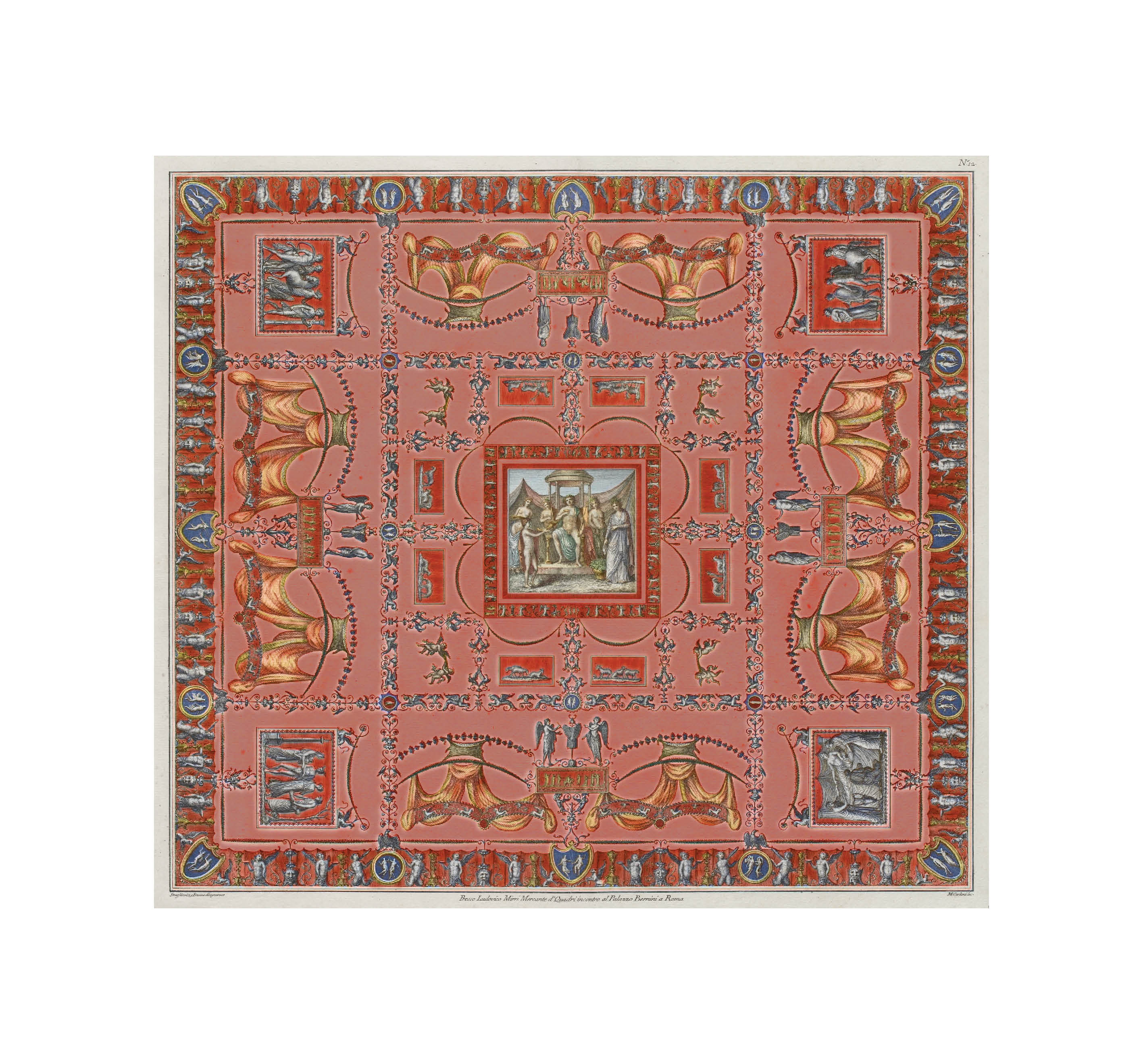
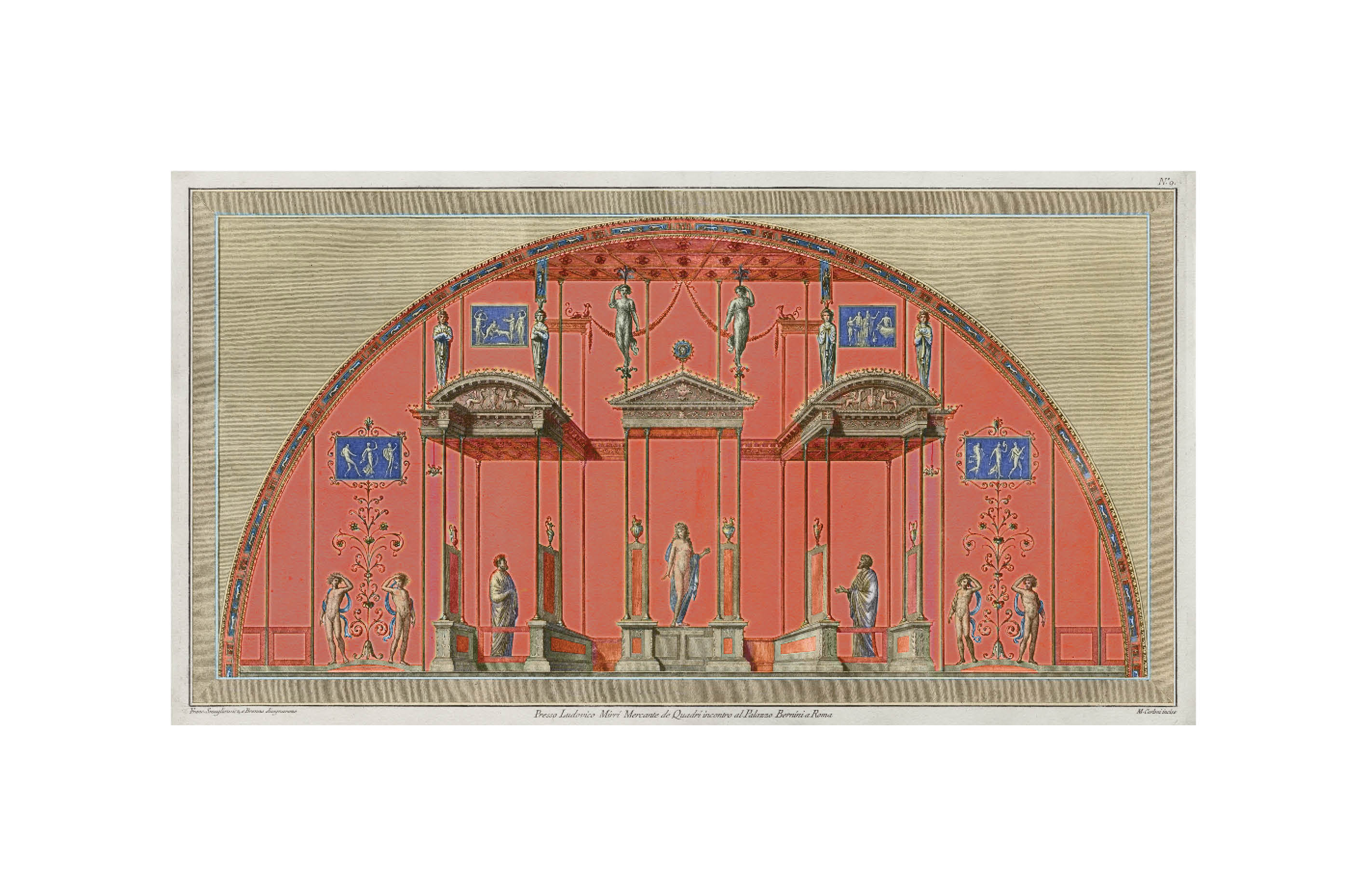
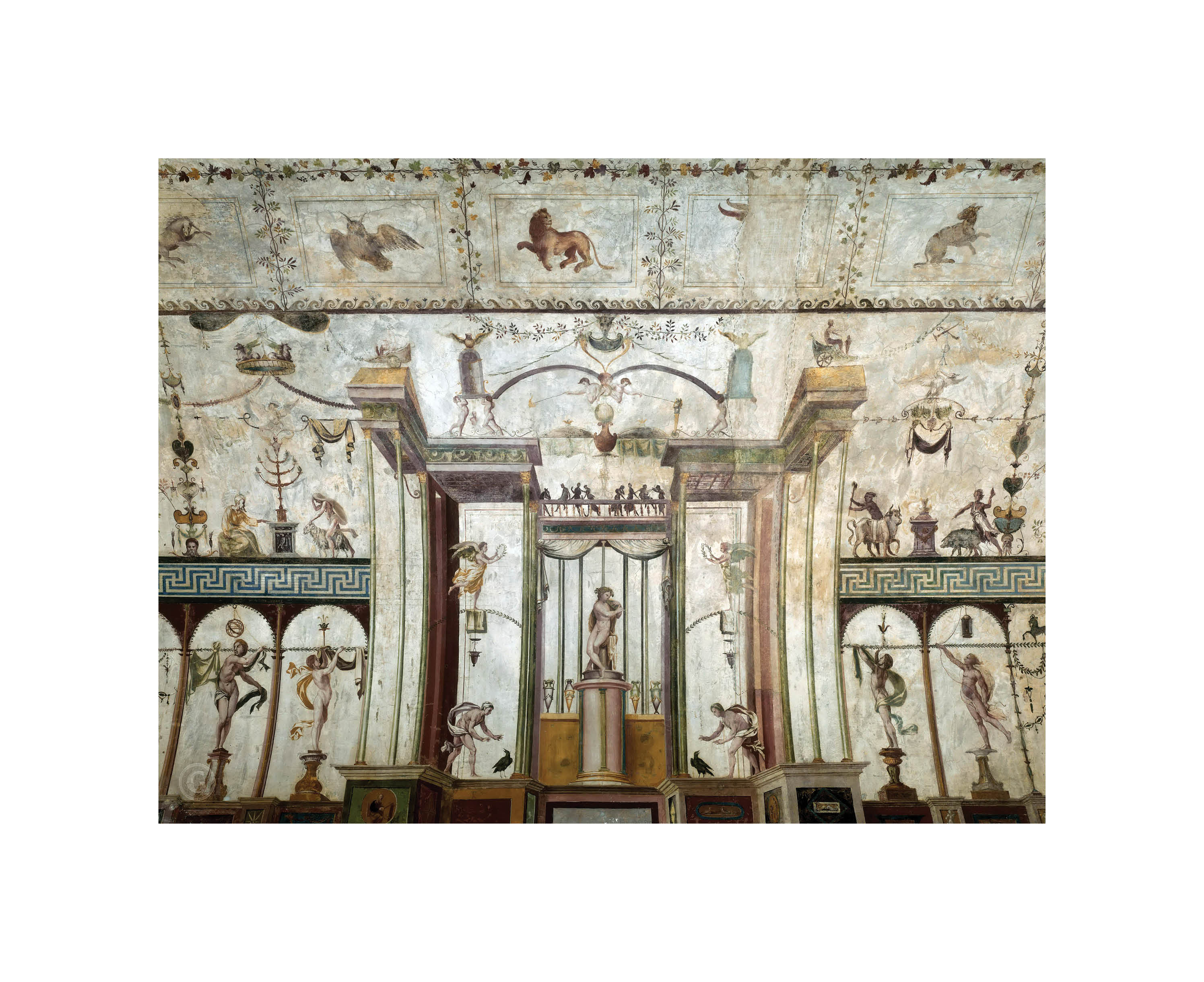
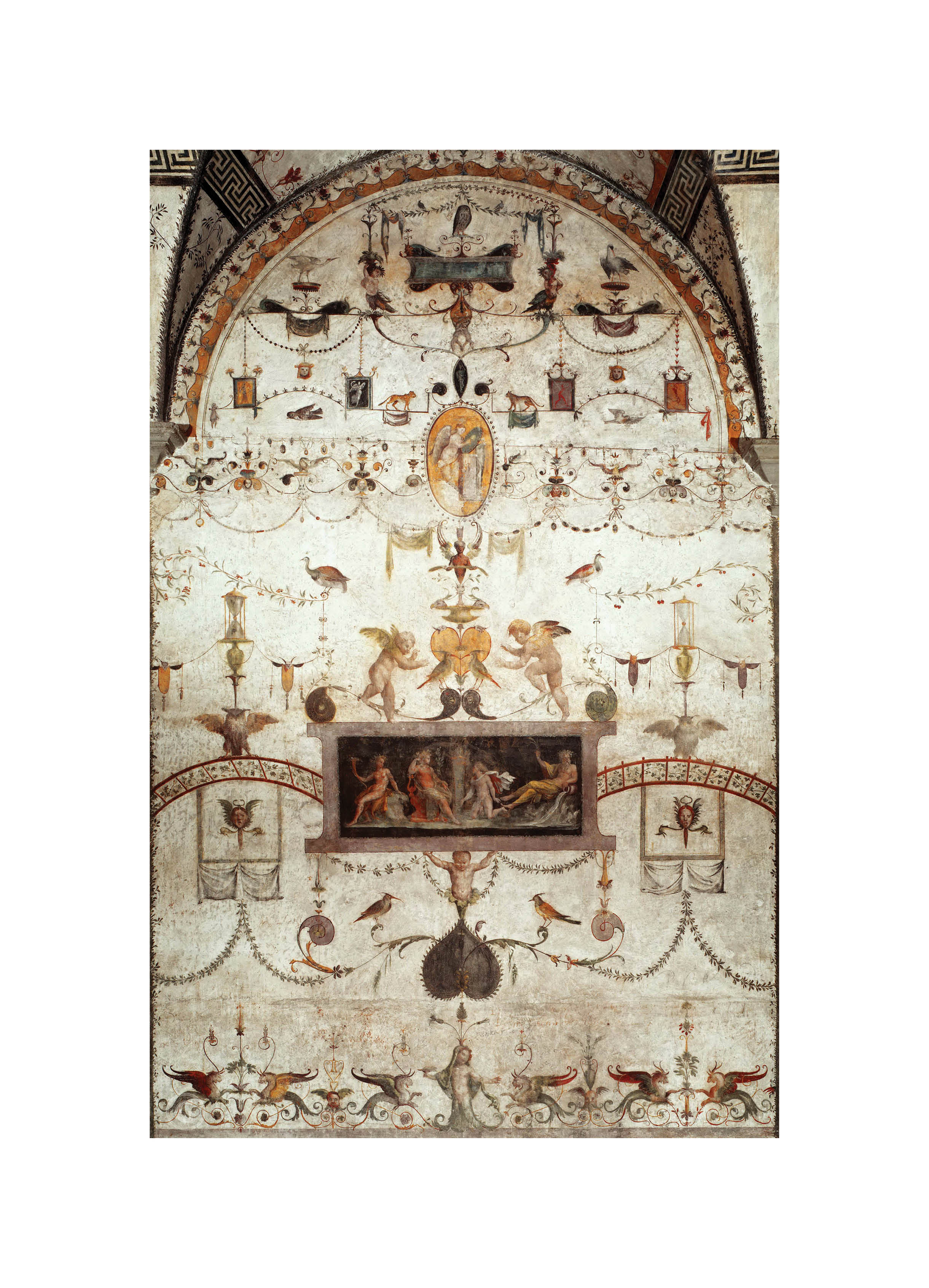
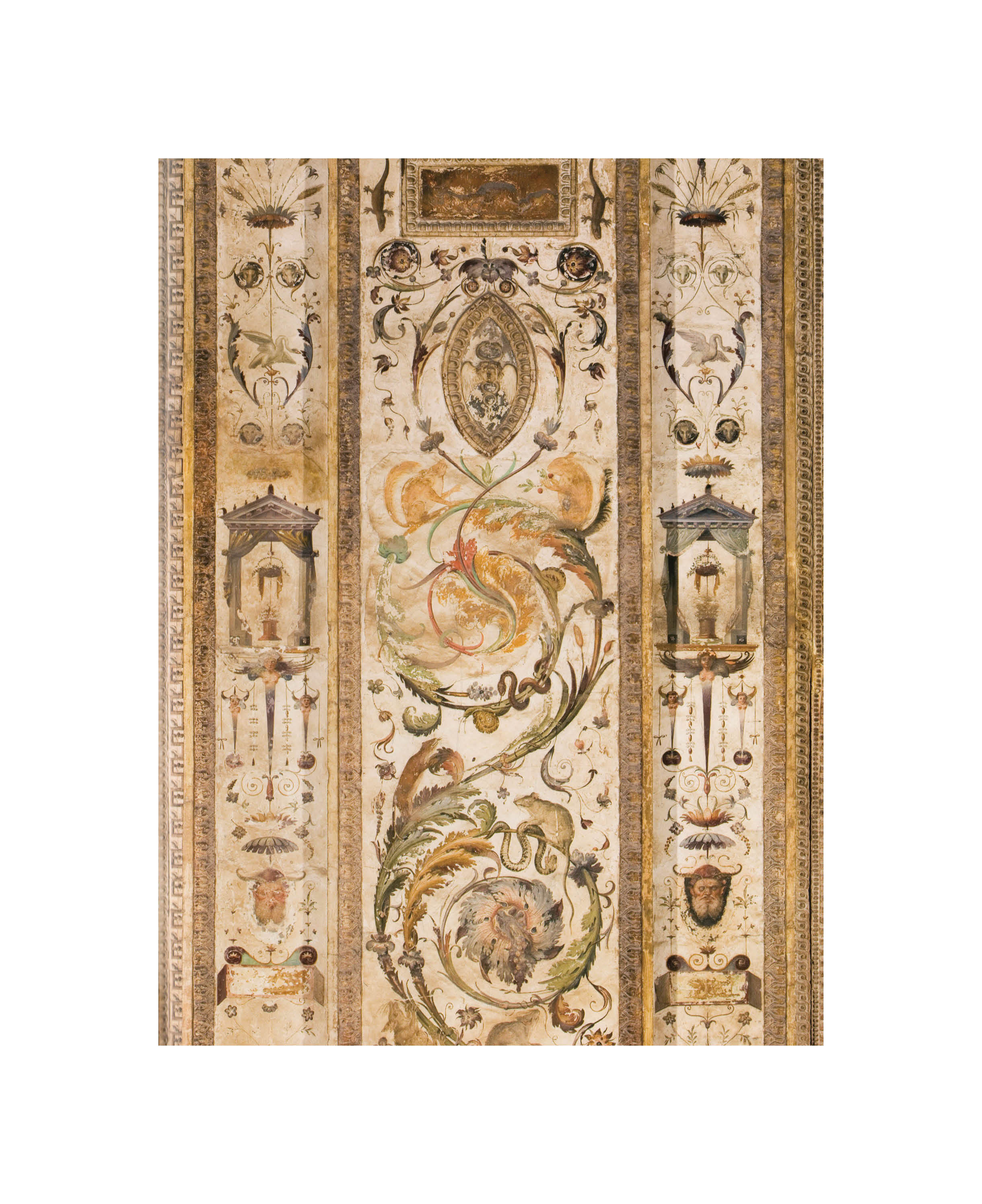
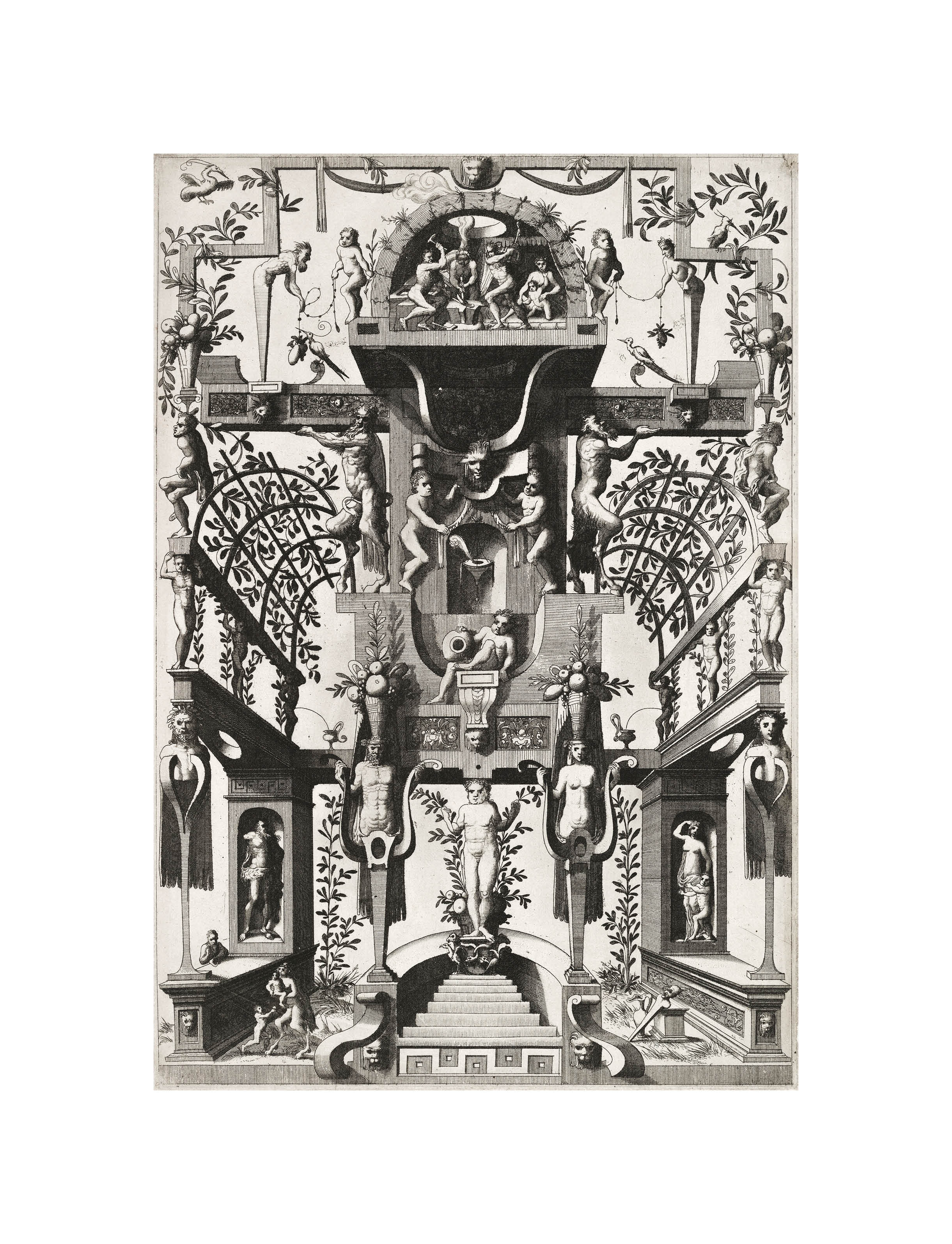
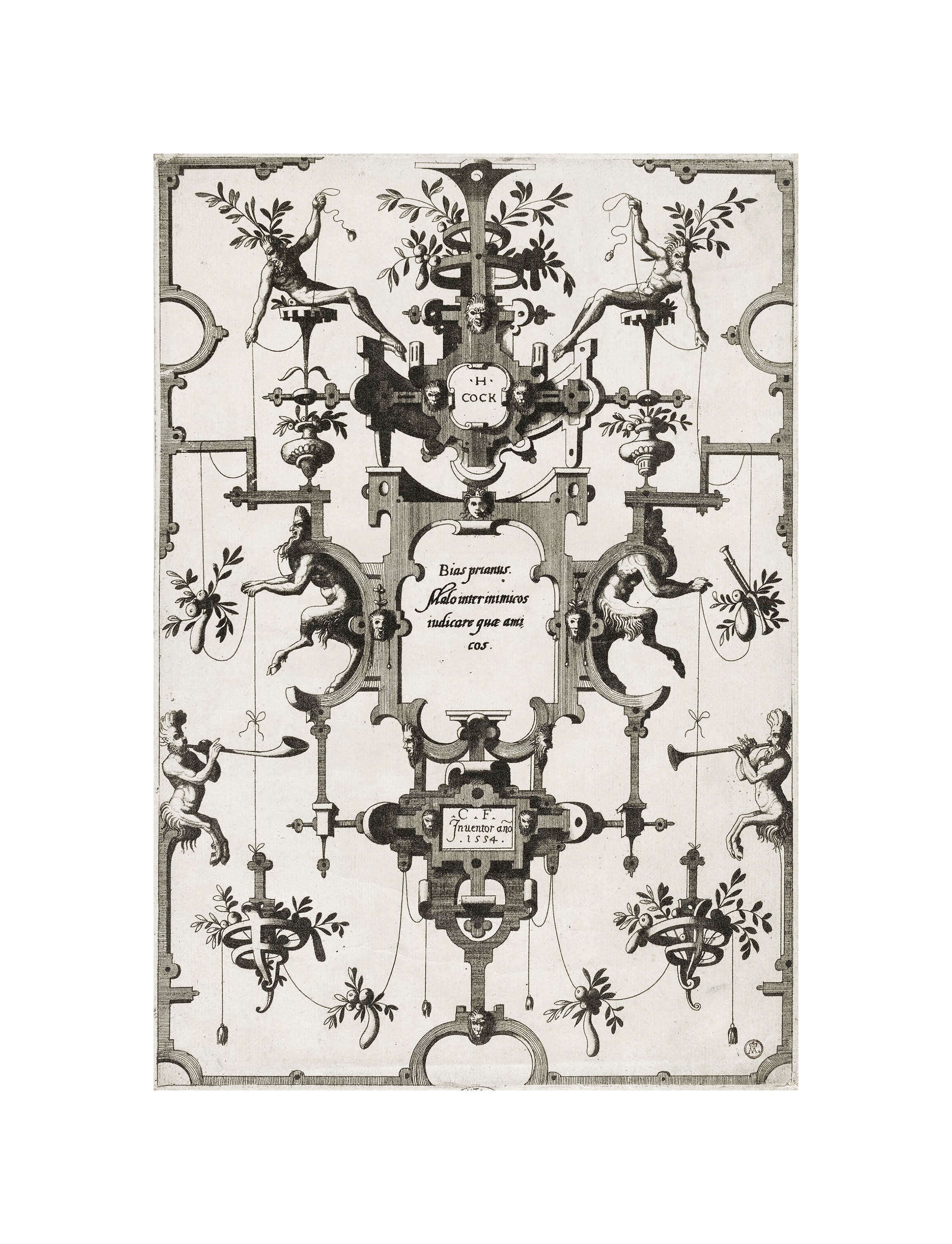
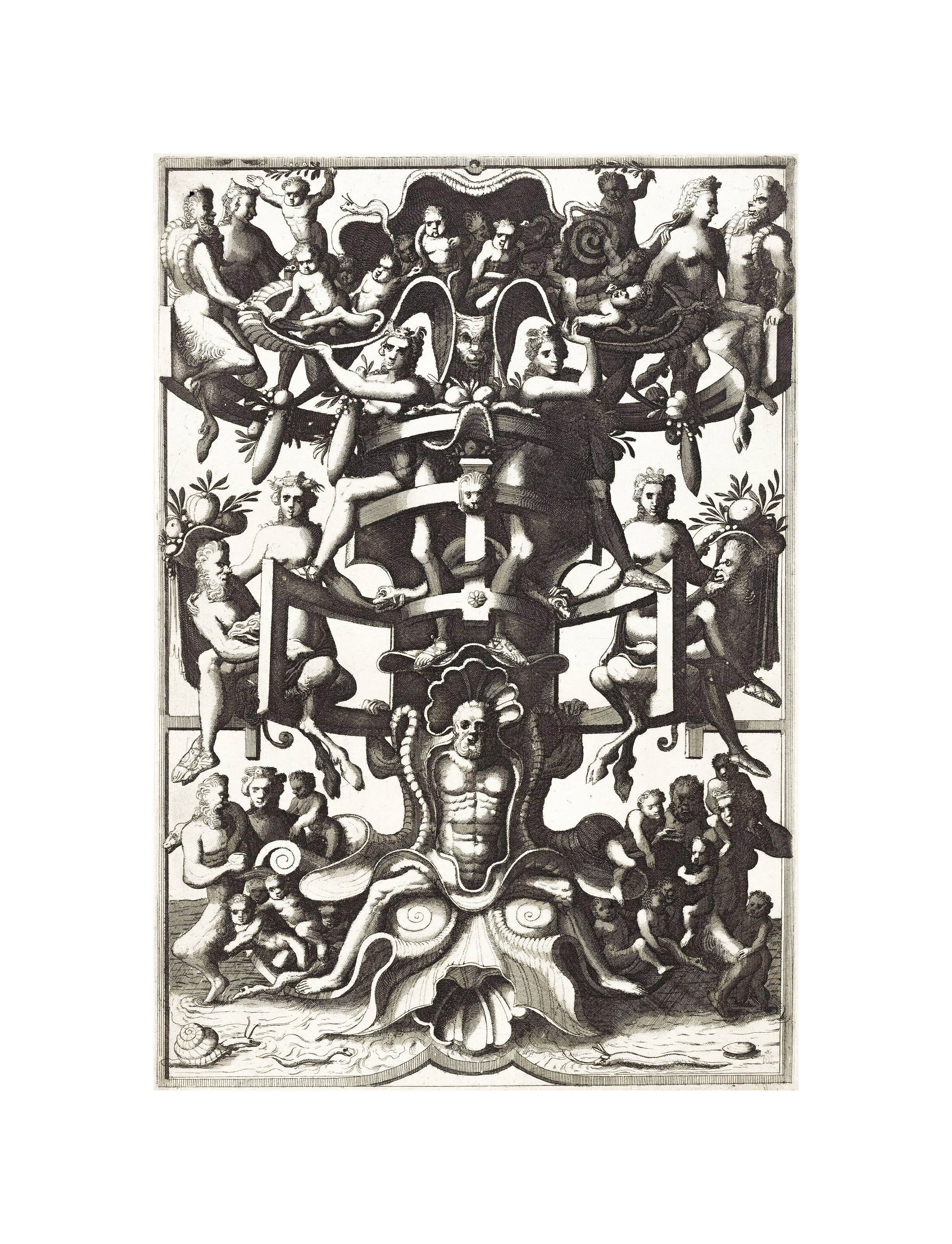
Plate 1. Colourised version of a 1776 print of the 64-68 CE ceiling in the Sala della Volta Rossa at the Domus Aurea, attributed to Fabulus, scaled at 1:2 of the original engraving. Carloni, Smuglewicz, and Brenna, Vestigia delle terme di Tito e loro interne pitture, 12.Plate 2. Colourised version of a 1776 print of the 64-68 CE southern wall in the Sala della Volta Rossa at the Domus Aurea, attributed to Fabulus, scaled at 1:2 of the original engraving. Mirri, Smuglewicz, Brenna and Carloni, Vestigia delle terme di Tito e loro interne pitture, 8.Plate 3. Colourised version of a 1776 print of a 64-68 CE lunette in the Sala della Volta Rossa at the Domus Aurea, attributed to Fabulus, scaled at 1:2 of the original engraving. Carloni, Smuglewicz, and Brenna, Vestigia delle terme di Tito e loro interne pitture, 9.Plate 4. Photograph of a 1516 vault in the Loggetta di Cardinal Bibbiena. Da Udine and Raphael, Fresco in the Loggetta of Cardinal Bibbiena.Plate 5. Photograph of a 1516 wall and lunette in the Loggetta del Cardinal Bibbiena. Da Udine and Raphael, Fresco in the Loggetta of Cardinal Bibbiena.Plate 6. Photograph of the 1518-1519 column X in Raphael’s second Loggia. Raphael et al., The Vatican Loggia, Pilaster XI, with acanthus foliage populated by animals.Plate 7. 1557 Grotesque ornament print, designed by Cornelis Floris, engraved by Lucas or Johannes van Doetecum, published by Hieronymus Cock, 1 of 14 prints in the series. Floris et al., Vlakdecoratie en grafmonumenten.Plate 8. 1556 Grotesque ornament print, designed by Cornelis Floris, engraved by Lucas or Johannes van Doetecum, published by Hieronymus Cock, 1 of 6 prints in the series. Floris et al., Scrollwork cartouche.Plate 9. 1557 Grotesque ornament print, designed by Cornelis Floris, engraved by Lucas or Johannes van Doetecum, published by Hieronymus Cock, frontispiece of 14 prints in the series. Floris et al., Vlakdecoratie en grafmonumenten.

 Leo Kauntz Moderini