The IBM Travelling Pavilion is exemplar of lightweight construction and experimentation with material. First designed by RPBW in 1964 and inaugurated in 1984, it pioneered prefabrication and design for disassembly. Attention to detail and structural legibility characterise the project.
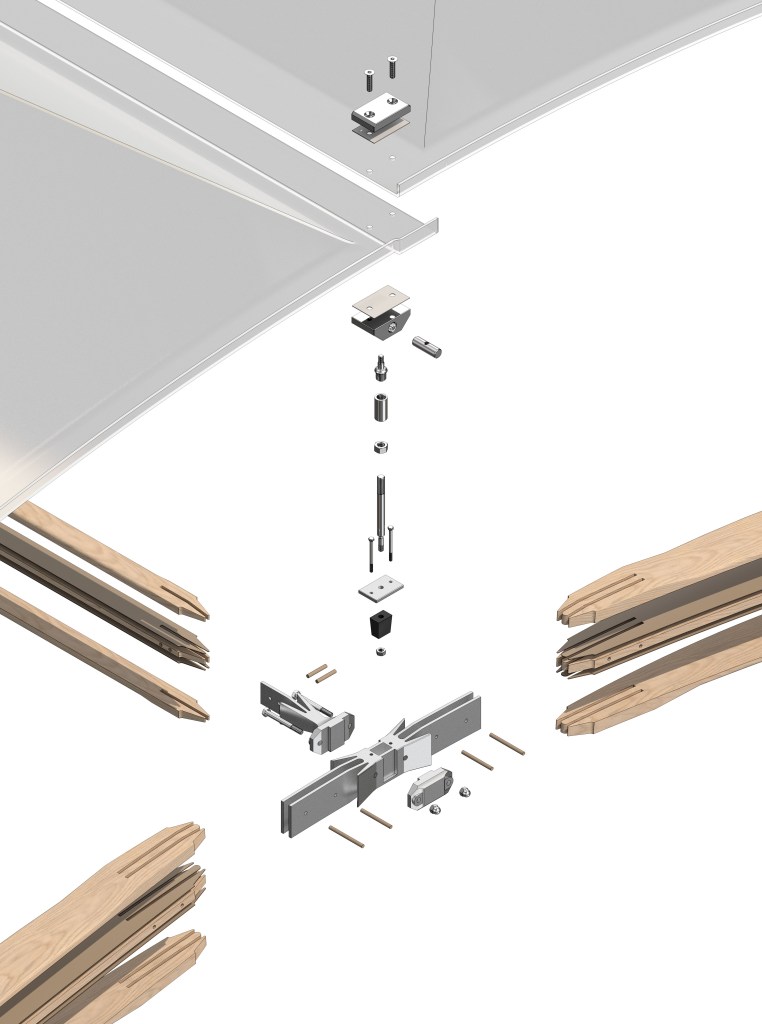
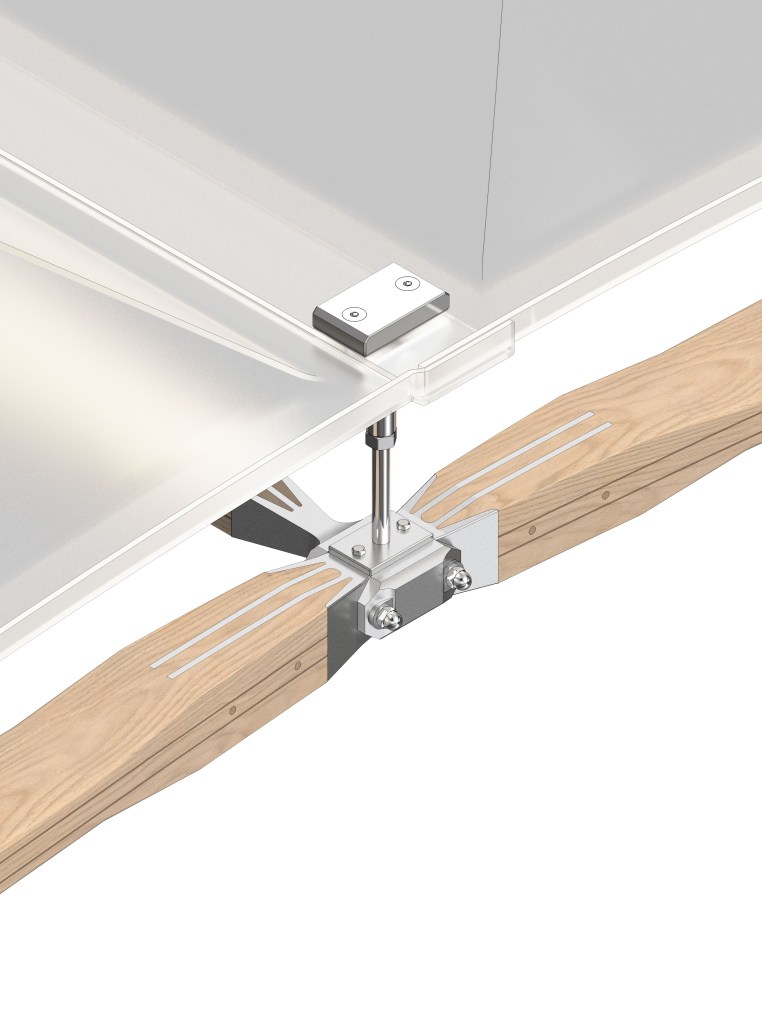
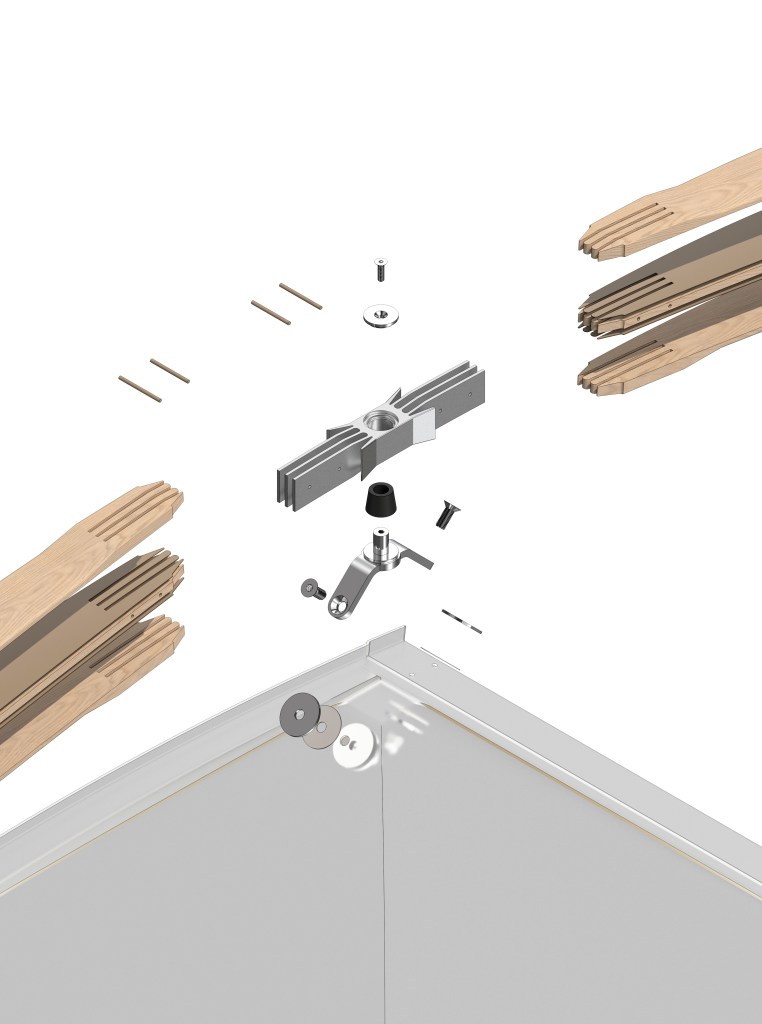
Two key nodes are of particular importance to the arches of the IBM Travelling Pavilion. One joins the inner chord segments and horizontal ties, the other joins the outer chord segments. Any segment consists of three laminated beech veneers and is finger-jointed, glued and dowelled to a cast aluminium node on each side. The inner chords are fastened to the horizontal ties using two stainless steel bolts and an end-plate.
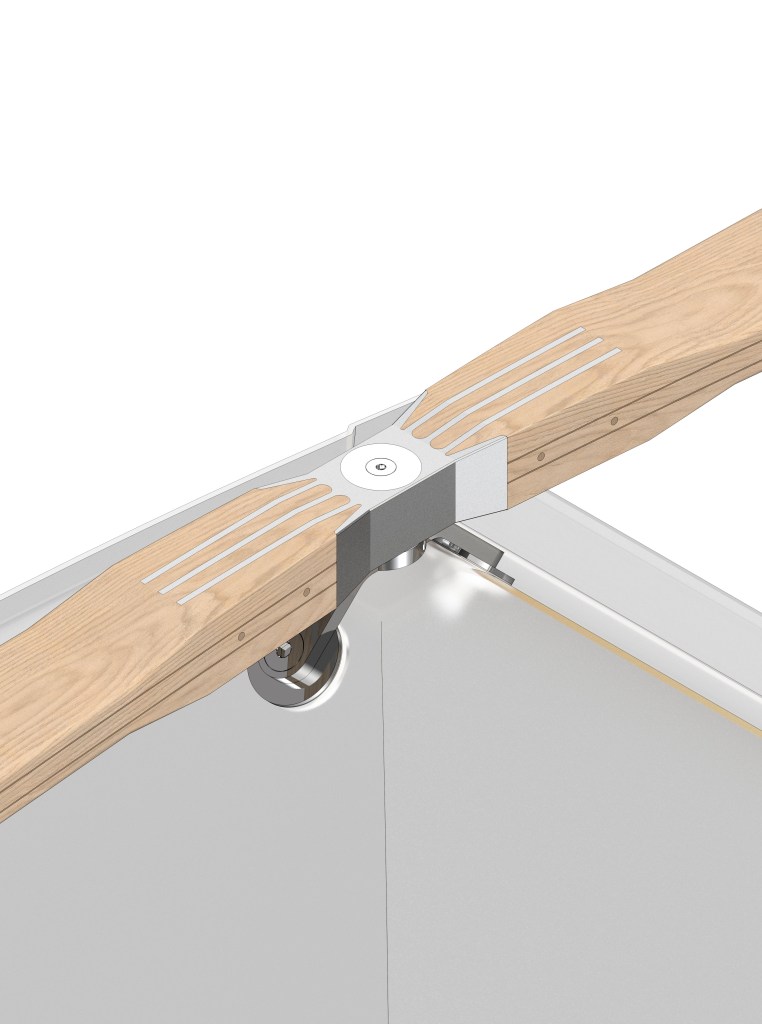
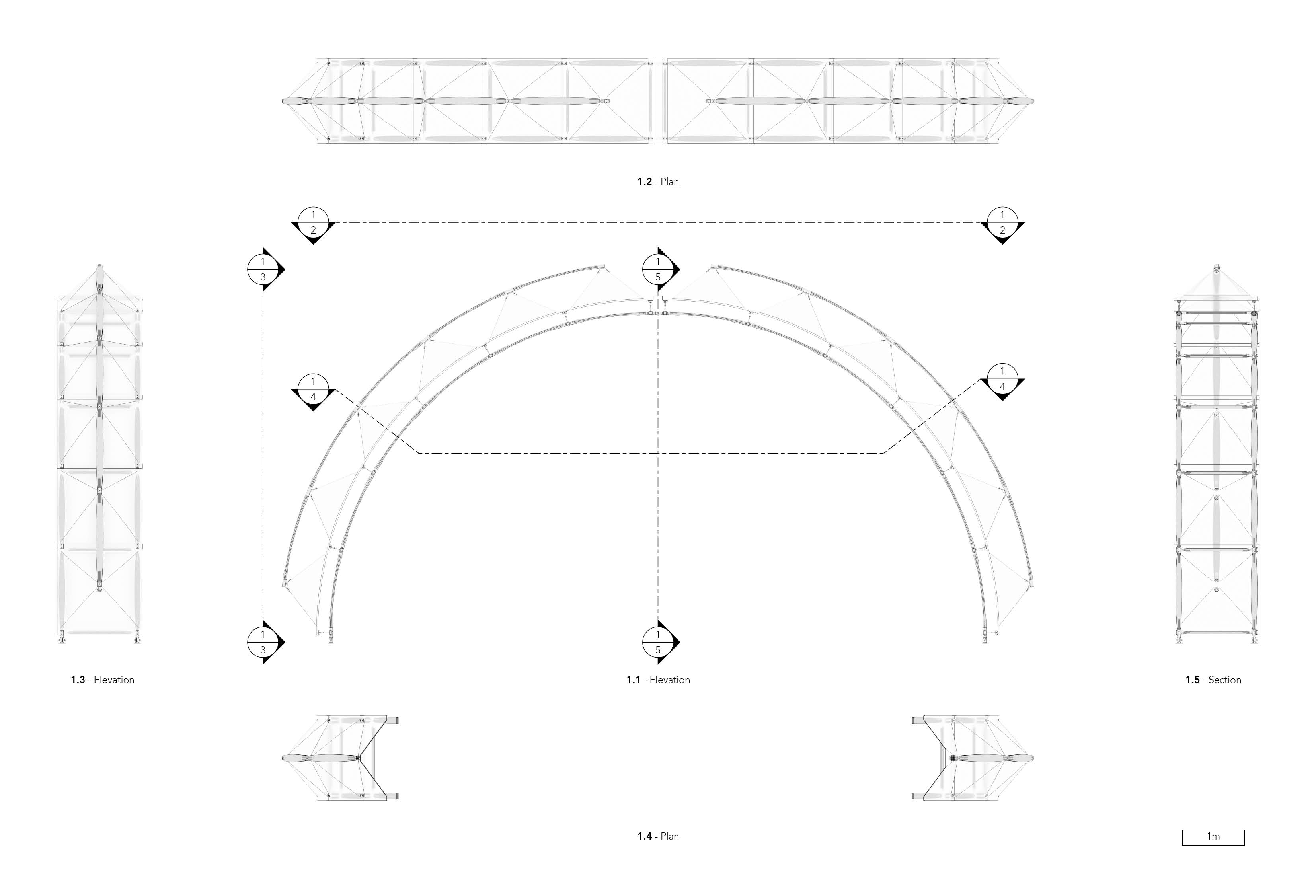
The pavilion consists of 34 three-pinned arches. Each arch segment is made up of two inner chords and an outer chord, connected through six polycarbonate pyramids acting as struts. Each chord is made from beech segments and aluminium nodes. Push-fit connections ease assembly.
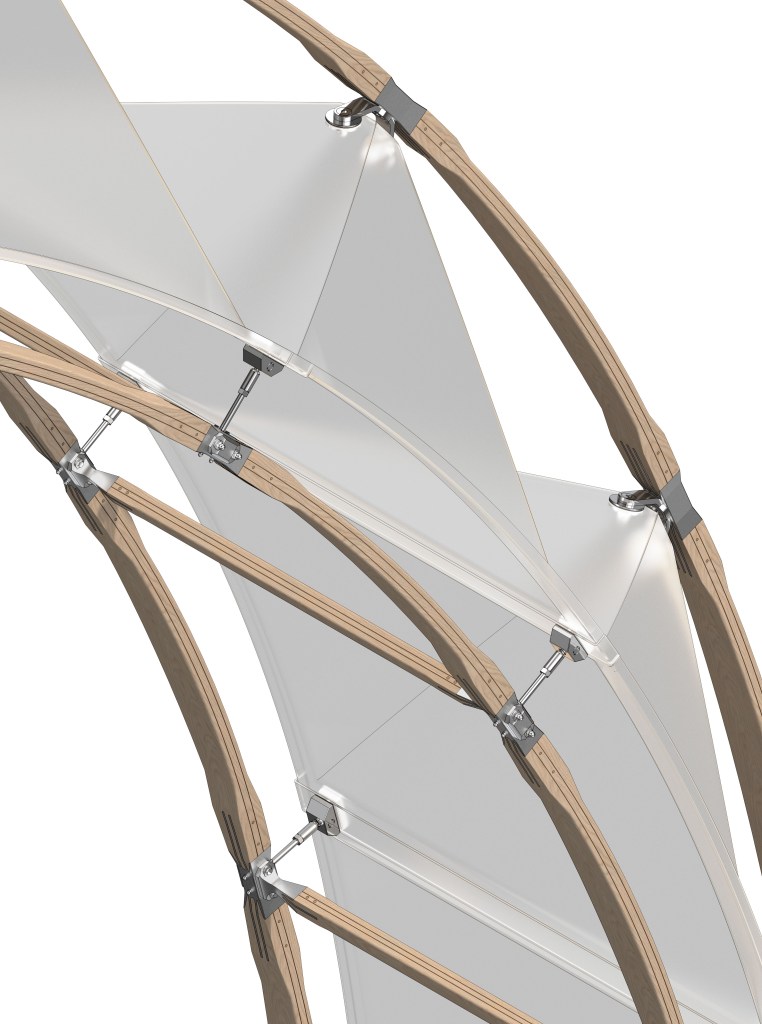

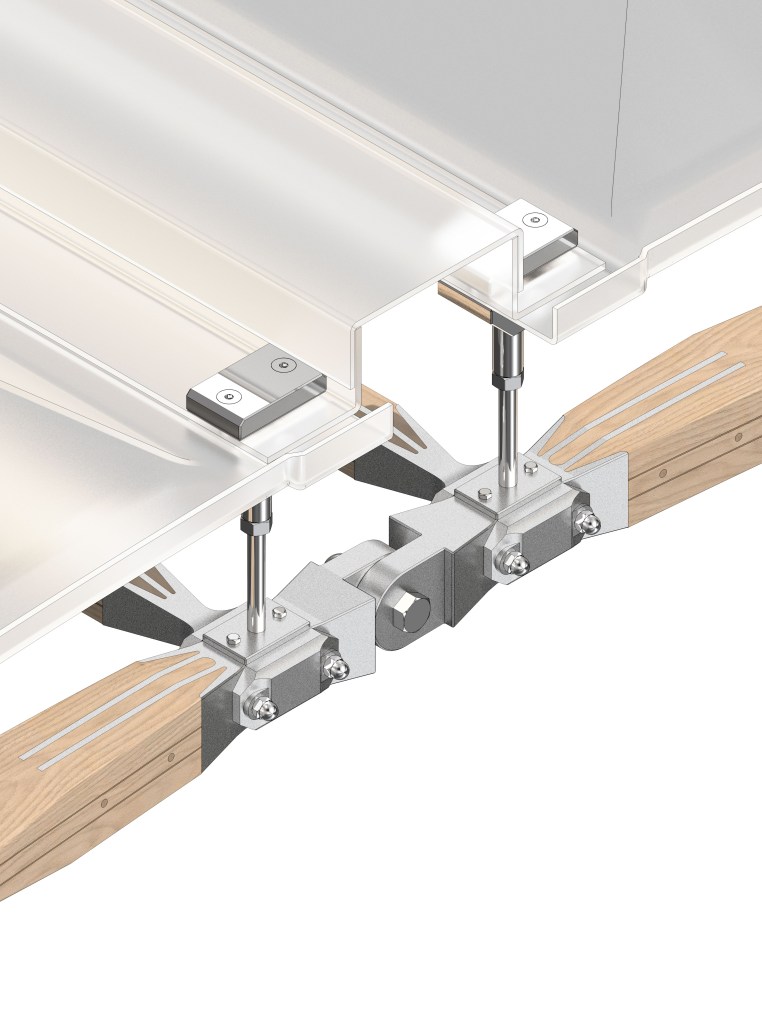
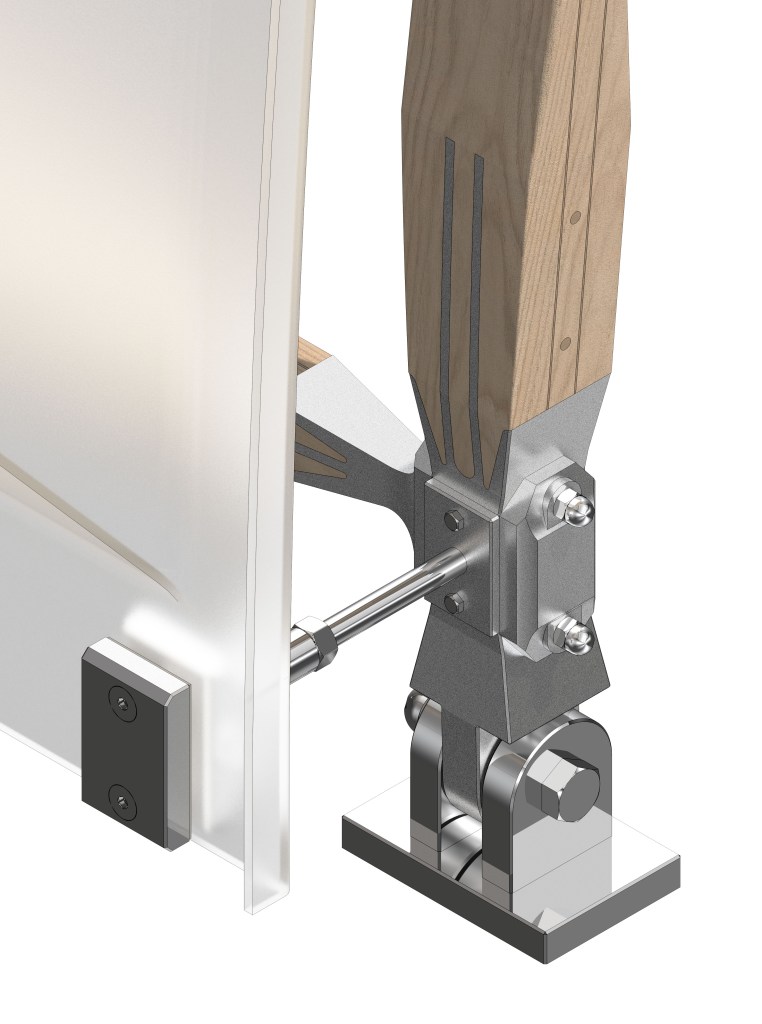
Having considered the IBM Pavilion, a new system is developed. Similarly, it uses timber for members in compression, aluminium for the nodes and stainless steel for fixings and elements in tension. Dowel lamination removes the need for adhesives. Higher buckling lengths of the compressive members are achieved through an increase in the structural depth by introducing voids between the timber layers.
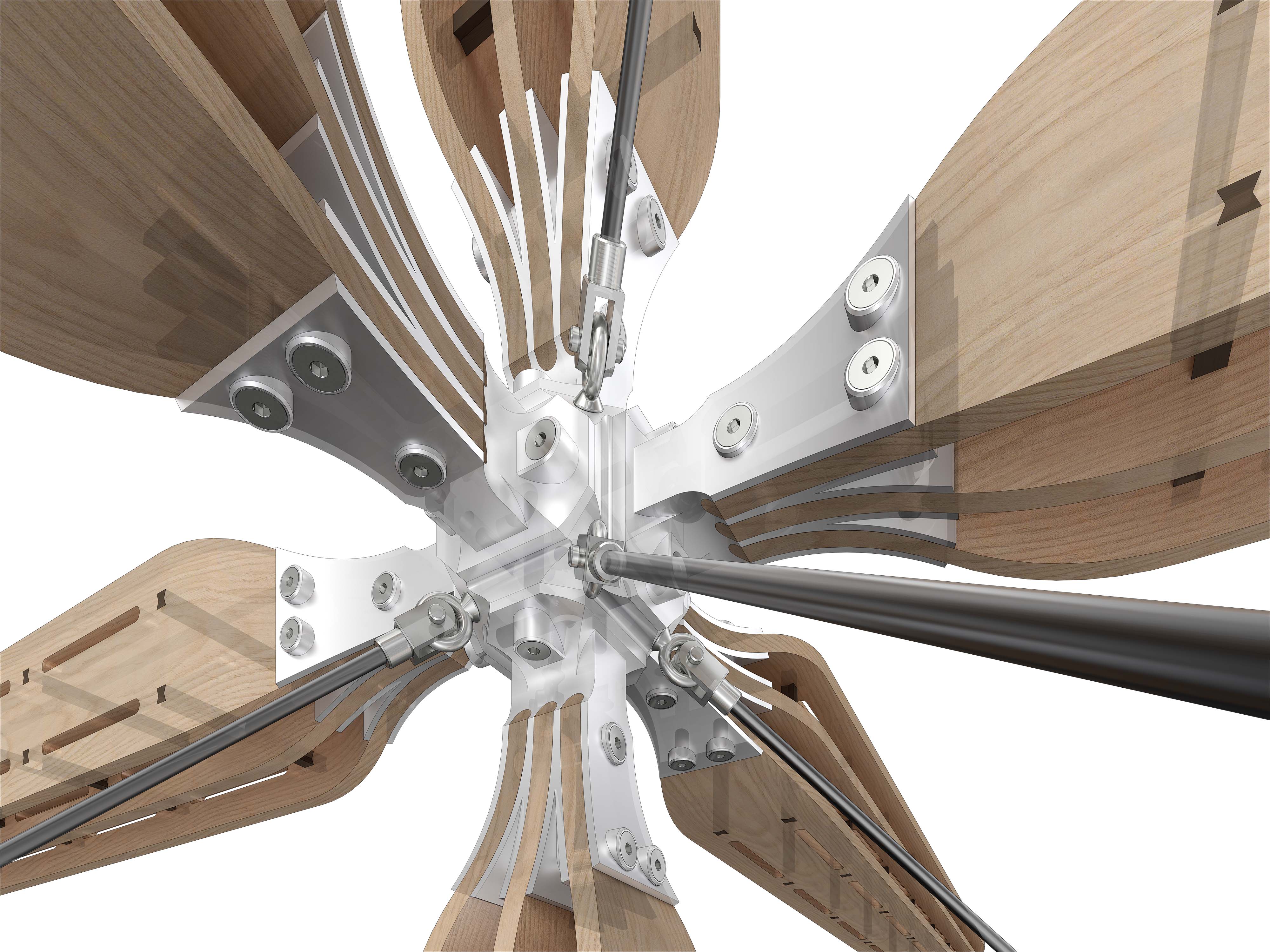
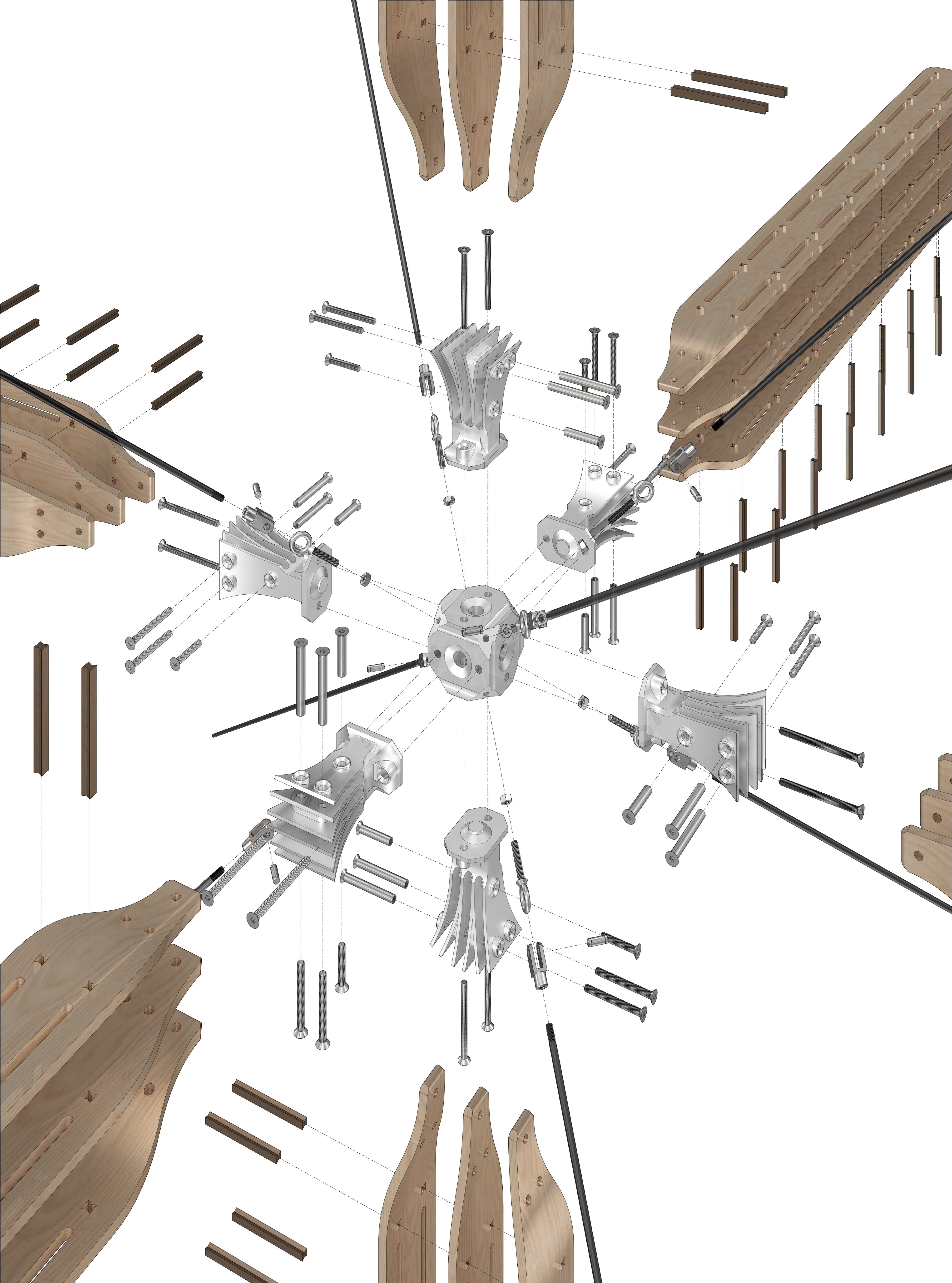
The compressive elements predominantly consist of timber. Each element is made up of two steam-bent and a planar layer of 12mm beech wood, connected using 16 densified wood dowels. The ends are slid into two cast aluminium nodes and secured using three countersunk bolts and barrel nut each. Two more bolts connect the member to a central node. Tensile elements consist of high-strength steel rods, threaded on both ends, hosting clevises attached to eye bolts on a central node.
 Leo Kauntz Moderini